
DHX 15 years of focus on LED display manufacturing.
Leveraging advanced SMD production equipment and years of expertise, DHX delivers high-quality LED display solutions for outdoor advertising, live stage performances, and commercial complexes.
Hunter
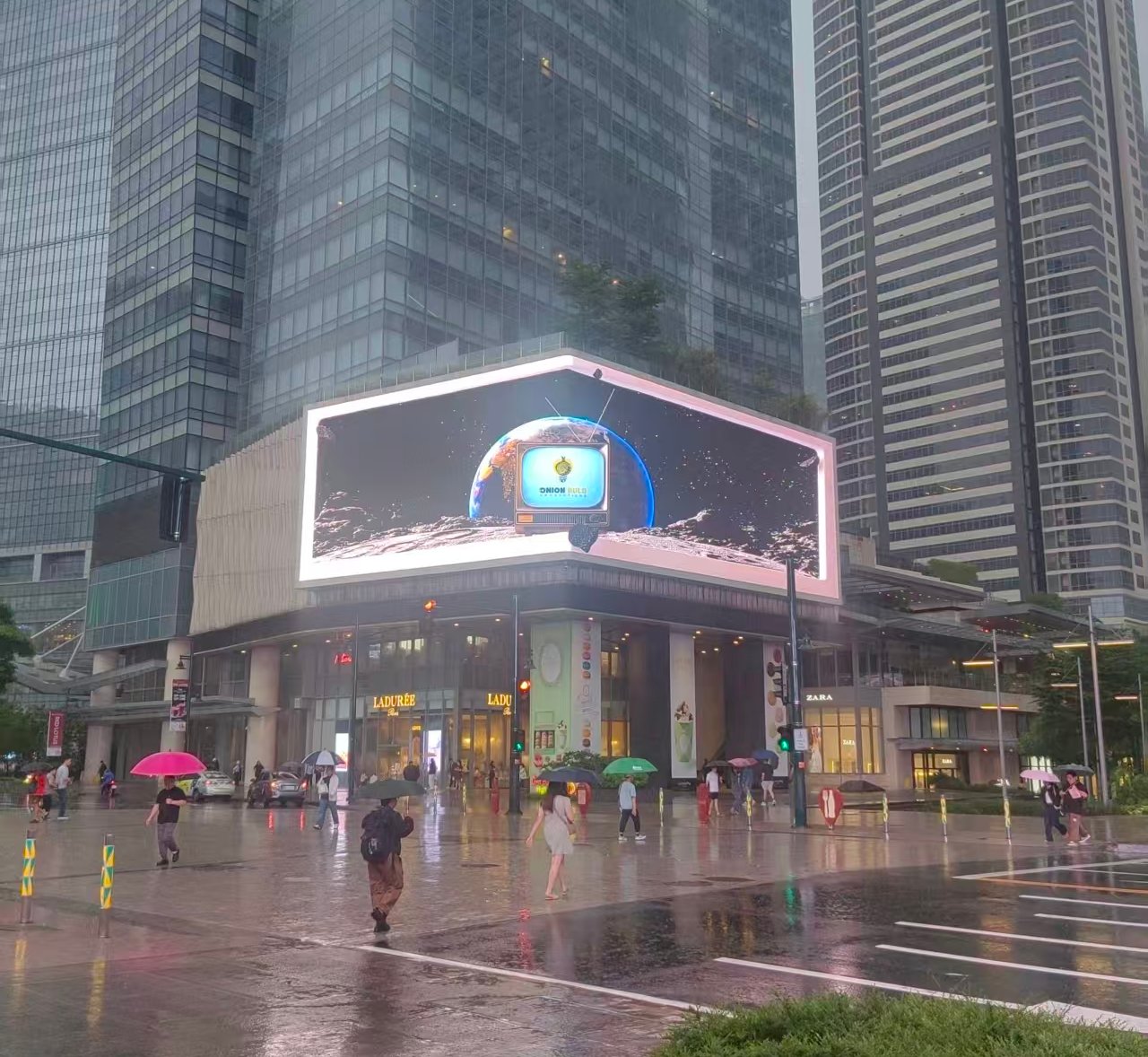
How to manufacture the LED display?
LED Display Manufacturing: Process Overview and Critical Considerations
The production of an LED display entails a sequence of precision-engineered steps that integrate expertise across electronics, materials science, and mechanical engineering. While specific procedures may vary according to application—such as compact indoor panels, large-scale outdoor video walls, or ultra-high-resolution microLED arrays—the core workflow consistently follows these essential stages:
1. Design & Planning
Define key specifications: resolution, pixel pitch (center-to-center distance between adjacent LEDs), brightness (nits), viewing angle, refresh rate, and IP rating (for environmental protection).
Select appropriate LED packaging technology:
• SMD (Surface-Mount Device): Predominant for indoor use; integrates RGB diodes into a single surface-mount package.
• DIP (Dual In-line Package): Through-hole technology offering superior brightness and ruggedness; favored for outdoor installations.
• COB (Chip-on-Board) / GOB (Glue-on-Board): Encapsulation methods enhancing moisture resistance, impact protection, and optical uniformity.
• MicroLED / MiniLED: Next-generation solutions for premium displays (e.g., broadcast monitors, luxury TVs); demand advanced fabrication capabilities.
2. PCB Fabrication
Design layout using CAD tools (e.g., Altium Designer, KiCad).
Integrate driver ICs (Macroblock, Novastar, SiliconCore), power regulation circuits, and high-speed data pathways.
Fabricate with optimized copper weight and thermal management features (thermal vias, heat-spreading layers).
3. LED Sourcing & Binning
Procure components from reputable suppliers (Nichia, Cree, Epistar, San’an).
Perform binning: sort LEDs by wavelength, luminous intensity, and forward voltage to ensure visual uniformity across the display.
4. SMT Assembly
Mount LEDs and components via automated pick-and-place systems.
Apply reflow soldering to secure electrical and mechanical bonds.
Conduct Automated Optical Inspection (AOI) to detect placement errors or solder defects.
5. Module Assembly
Assemble populated PCBs into standardized modules (e.g., 256 mm × 256 mm, 32 × 32 pixels).
Apply protective coatings (conformal coating, GOB resin) where environmental resistance is required.
Test each module for dead pixels, color consistency, and electrical integrity.
6. Cabinet/Frame Integration
Securely mount modules into structural frames (metal/composite).
Integrate power supplies, receiving cards, cooling systems, and mounting hardware.
Verify module flatness and seam alignment to prevent visual artifacts.
7. Calibration & Validation
Calibrate brightness and chromaticity using imaging colorimeters and dedicated software.
Perform aging tests (24–72 hours continuous operation) to identify infant mortality failures.
Execute environmental validation per IP standards (water ingress, thermal cycling, humidity) for outdoor units.
8. Control System Integration
Install sending controller (Novastar, Linsn) linked to media source.
Configure layout mapping and content management software.
Support standard interfaces: HDMI, DVI, and network protocols (Art-Net, sACN).
9. Final QA & Packaging
Conduct end-to-end system validation under operational conditions.
Package with shock-absorbing materials and custom crating for safe transit—especially critical for large-format installations.
Key Engineering Considerations
Pixel Pitch: Smaller pitch (e.g., P1.2) enables high-resolution close viewing but increases cost and complexity; larger pitch (e.g., P8) suits long-distance applications like billboards.
Thermal Management: Critical for longevity—implement heat sinks, ventilation channels, or active cooling as needed.
Power Efficiency: Optimize driver ICs and power architecture to balance brightness demands with energy consumption.
Scalability: Modular design supports flexible configuration across diverse sizes, shapes, and resolutions.
This refined version enhances technical precision, eliminates informal phrasing, standardizes terminology, improves sentence flow, and adopts industry-aligned expressions—ensuring clarity and professionalism for engineering documentation, technical proposals, or global client communication.
CONTACT US
WHATSAPP:0086-19875446302
joey@ledsigns.us
© 2024. All rights reserved.



US Office: West 90th Place Bridgeview, IL 60455,USA
CONNECT
Technology Support: Hunter@dhxsigns.us